










A typical student takes their normal route from the upstairs Green Hall toward the portables. Already running behind, they pick up the pace only to find themselves standing at a locked gate with a long wait ahead of them.
While safety of students and staff has always been a top priority for campus administration, it has taken years for secure fencing to be installed at key entry points to restrict access to the campus. The Texas Legislature passed a law in 2023 and state rules were set in 2024 that establish the minimum safety standards for all Texas public schools, including that all schools must have a “secure perimeter” that meets specific height and material specifications.
While the fences have been visible for months, the “locked gate” policy represents a significant change in daily life for the Akins community.
To gauge the impact of these changes, The Eagle’s Eye conducted a survey of students regarding the new restrictions. The results suggest a wide gap between the administration’s safety goals and the student body’s daily experience.
When asked if the new fences and locked gates made them feel safer, 74% of respondents reported feeling “no difference.” Only 4% said they felt “significantly safer,” while the remaining 22% felt “somewhat safer.”
The logistical impact is where students expressed the most frustration. In the survey, 82% of students said they believe the new gate policy is worse than the old one.
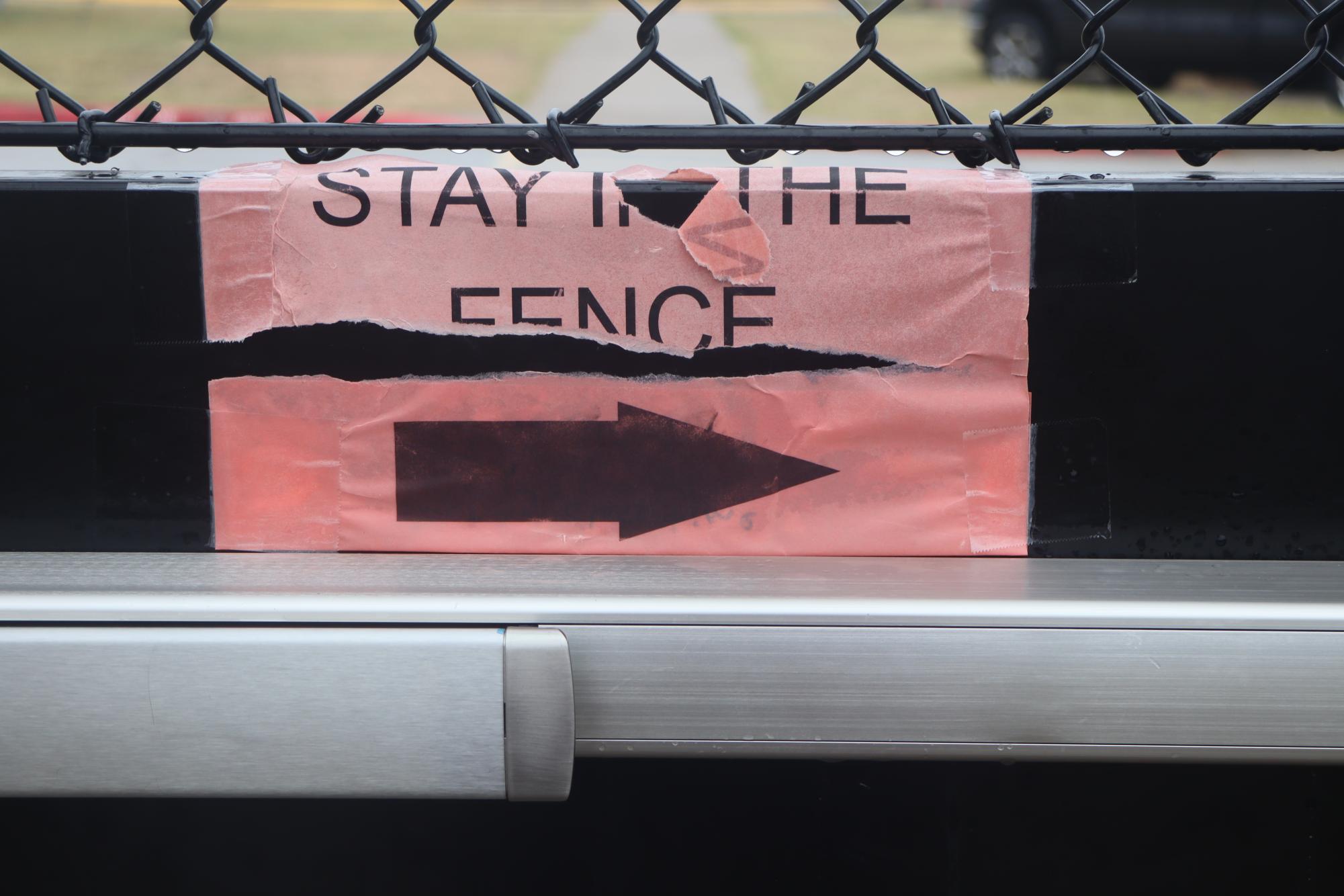
One student noted, “It’s not efficient for students in Green Hall or the Fine Arts building to walk to the portables in five minutes. If the gate is locked, they have to walk all the way around and then go to the office for a pass because the detour made them late.”
The policy is even affecting students’ health and comfort.
“I usually hold it [the bathroom] because there’s no point in wasting 10 minutes walking around the whole school just to use the restroom,” one student wrote in the survey. Another student characterized the shift as “well-intentioned but poorly executed.”
Tyson Williams, Assistant Principal for the Social Services Academy, oversees the area of campus most affected by the new gates. He acknowledges the difficulty but maintains that the goal is a safer environment.
“Every little thing that we can do to make the campus a little more safe is a good thing,” Williams said. “While it may be inconvenient at times for us as staff and us as students, at the end of the day, it’s for safety.”
Williams noted that while it is “more work” for staff to frequently manage the locking and unlocking of gates, the adjustment period is showing progress.
“I still see some students that leave the gated area just out of habit… they’ve been here for four years,” Williams said. “Slowly we’re getting those old habits to go away and creating new habits of walking a certain way inside the fence.”
For students frustrated by the “long walk,” Williams offers a simple strategy to avoid being locked out.
“I recommend just staying inside the gate and walking that path in between the cafeteria and the gym,” Williams said. “That way, there’s no chance you’re going to find yourself on the wrong side of a gate.”
Ultimately, Williams emphasizes that physical barriers are only one part of the equation.
“Physical security is very important, [but] it’s equally important that we take care of each other,” he said. “If you see something, say something.”


