









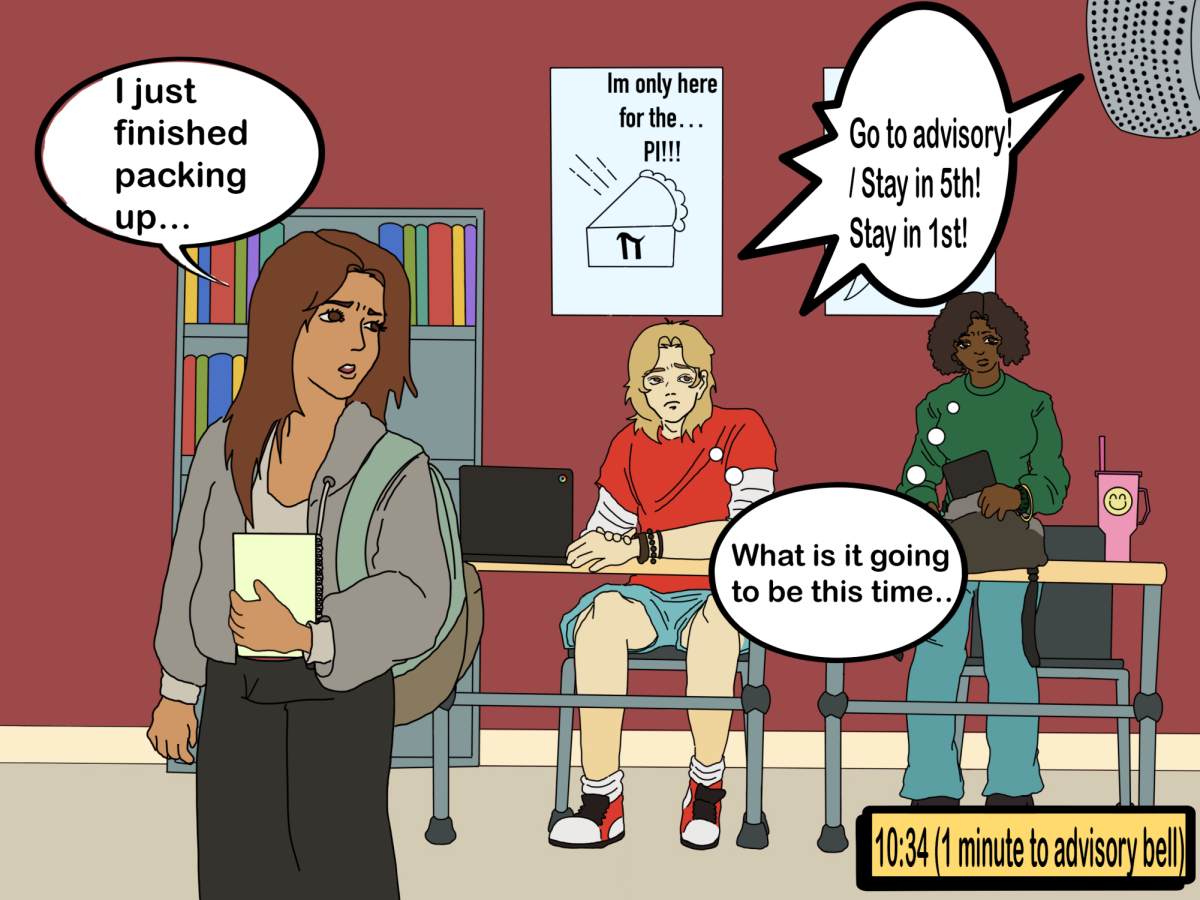
Every year—sometimes even every day—our advisory schedule changes. Confusion, frustration, and annoyance are just a few words that describe how we, and the majority of the Akins community, feel about this inconsistent class period.
Originally promised as a sanctuary for tutoring and catching up on assignments, advisory has instead become a primary source of stress for students and teachers alike. It often feels as though no one truly knows the plan for advisory until five minutes before the bell rings, leaving students with no room to plan their academic needs.
This is not a new phenomenon. Advisory has been hectic and unorganized for years, swapping from rotating schedules to digital sign-up websites, to holding students in first and fifth periods, as well as the specific designated advisory teachers. A finalized, working plan is what this school desperately needs.
As an editorial board, we believe that these inconsistent changes to advisory are significantly hindering student success. Without the ability to transition to another classroom to make-up work or follow up with a specific teacher, students are finding it impossible to keep pace with their academics.
In our view, the “Flexible Instruction Time” (FIT) model was the most effective variation of advisory this campus has seen, as it empowered students to decide exactly where they needed to be for those thirty minutes. It treated students as young adults capable of identifying their own academic weaknesses.
The current advisory system fails because it removes the very thing students need most: access. Students have lost the ability to receive timely tutoring, make up missed assessments, or meet with teachers before major deadlines. In a survey by The Eagle’s Eye conducted last spring, 78.6% of students reported that the current “Eagle Time” format failed to provide them with the tutoring they required.
FIT, by contrast, offered a structure that actually worked. It allowed students to exercise agency, choosing whether they needed to take a retake, attend a tutoring session, or participate in clubs and UIL programs that currently cannot meet under the present restrictions.
Rather than punishing the entire student body for the few who chose to misuse the system, the school should focus on refining FIT rather than replacing it entirely. A structured, improved version of FIT would restore student autonomy, reduce academic anxiety, and finally transform advisory into the helpful, purposeful period it was always meant to be.
However, we do not live in a perfect society, and there is no simple way to control the student body when a system is easily abusable. During the 2023-2024 school year, when we were able to select our FIT sessions, many students did not use the time for its intended purpose.
A large portion of the student body simply refused to sign up for sessions, leaving teachers with overcrowded rooms. Then there was the paramount issue: skipping. The prevalence of students leaving school grounds created a significant safety hazard. FIT was taken advantage of and it ultimately failed to serve the students who actually wanted to catch up.
While these chaotic tendencies led to the current restrictive “Eagle Time,” we believe the solution isn’t to lock students down, but to fix the management of FIT.
The school needs a middle ground—a system that offers the academic access of FIT with the accountability of the current model. Perhaps through better digital tracking or tiered privileges, we can find a way. Without it, advisory will remain nothing more than a wasted thirty minutes.