







When you think of Texas barbecue, you think of the heat, the smoke, and the long lines of people waiting for a taste of brisket.
But when I clock in at work, I’m thinking about something else entirely: the Michelin star hanging over our heads. I work at la Barbecue, an East Austin institution that has always been famous for its long lines and even longer list of accolades. But everything changed in late 2024 when the Michelin Guide arrived in Texas and awarded us one of its coveted stars. Suddenly, my after-school job wasn’t just flipping briskets or ringing up sodas; it was working on the front lines of one of the most prestigious kitchens in the world.
A Different Kind of BBQ Joint
Barbecue in Texas is often painted as a “boys’ club”. la Barbecue has always defied that stereotype. Founded in 2012 by LeAnn Mueller and Alison Clem, it carved out a niche as a female-owned, LGBTQ+-led powerhouse in a male-dominated field.
Their determination to showcase culinary excellence over tradition built a legacy that set the stage for our current success. Today, under Clem’s leadership, following Mueller’s passing in 2023, the restaurant remains a testament to doing things differently.
The Michelin Effect
I’ve been working at la Barbecue for about a year and a half, starting a few months before the Michelin announcement. I thought I knew what “busy” looked like. I was wrong.
Before the star, a 20-minute wait on a Tuesday was standard. Now, a two-hour wait is considered a lucky break. From my spot at the register, I have a front-row seat to the global obsession with our food. I meet tourists from New York, California, Tokyo, and London who have planned their entire vacations around eating our beef ribs. Many tell me they saw us on TikTok or read the Michelin guide on the plane.
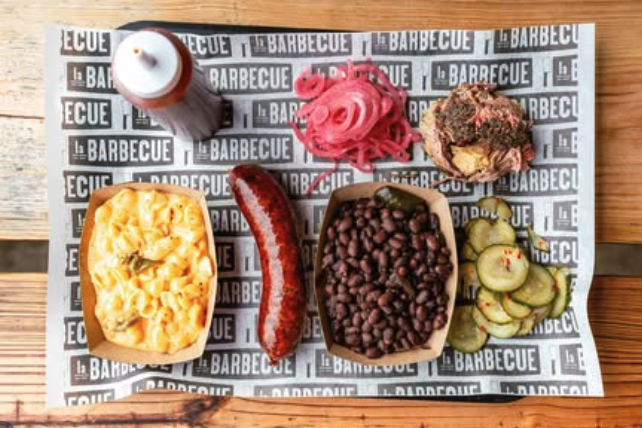
It’s a strange feeling to tell a customer who has waited in the Texas heat for 120 minutes that we are sold out of sausage, or to recommend a platter to someone who traveled 4,000 miles just to stand in front of me.
But despite the wait, the excitement is palpable. When they finally get their tray, they don’t look tired—they look victorious.
Family Ties
While the accolades are intimidating, the heart of the restaurant feels like family—literally. My uncle, Francisco Saucedo, is the pitmaster. In the world of barbecue, the pitmaster is the quarterback, the captain, and the rock star all rolled into one. While I’m managing the chaos at the front of the house, he’s in the back managing the fires.
He’s a local celebrity in his own right. Customers constantly ask for photos with him, treating him with the reverence usually reserved for athletes. We don’t get to hang out much during the rush, but those brief moments before the doors open are my favorite part of the day.
I asked him recently how the Michelin star changed things for him. In true pitmaster fashion, he kept it humble.
“It’s cool, but we still do the same thing every day,” Saucedo said. “I just like making food people get excited about.”
When I pressed him on what it’s like to have his high school nephew working the register, he laughed. “You’re alright,” he said. “You don’t mess up too much.”
The Pressure and the Pride
For a high school student, the pressure is unique. Most teenagers worry about getting an order wrong because a customer might complain. At la Barbecue, there’s a subconscious feeling that the whole world is watching. We aren’t just serving lunch; we are maintaining a standard of excellence recognized by the highest authority in the culinary world. Yet, it’s also incredibly fun.
I get to see a side of the restaurant industry that few people my age ever experience. I’m learning that a Michelin star isn’t just about the food on the tray; it’s about the consistency, the culture, and the grind that happens long before the doors unlock.
Working at la Barbecue is exhausting, loud, and smells permanently of post oak smoke. But when I see the line wrapping around the block, I know I’m part of something special.